Dive in Evia

Karystos is located in the southern part
of Evia, Greece’s second-largest island. Above Karystos looms Mt. Ohi, Evia’s second-highest peak. A handful of traditional villages are nestled between Karystos and the Ohi mountain range, in verdant valleys whose streams never cease to flow. The largest of these vil-lages, Myloi, is crowned by the ruins of a Frankish castle; above the village, Roman quarries look much as they did when they were abandoned sometime in the second century CE. The largest of these (called the kolones, the columns) is on the
path that leads to the area’s oldest    archeological site, a Hellenistic temple known as the drakospito (the dragonhouse),    on Mt. Ohi’s summit.

click to enlarge   The villages throughout southern Evia are linked by    walking paths were once the only thoroughfares.
   Some of these paths are inlaid with stone (kalderimi),
   and many of them trace the same routes used by the    classical Greeks, the Romans, the Byzantines, the    Ottomans, and—until recently—southern Evia’s residents.    One of the longest stretches of kalderimi follows the    waters of the Dimosari gorge, whose flora includes
   species unique to southern Evia.

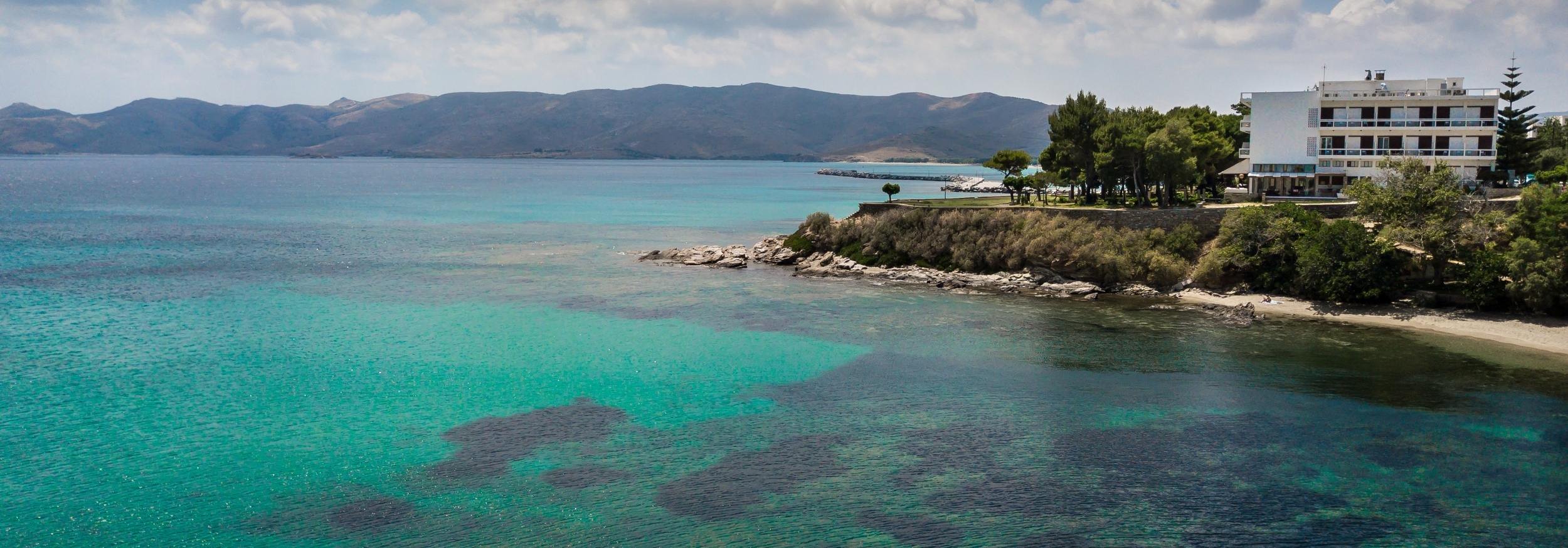
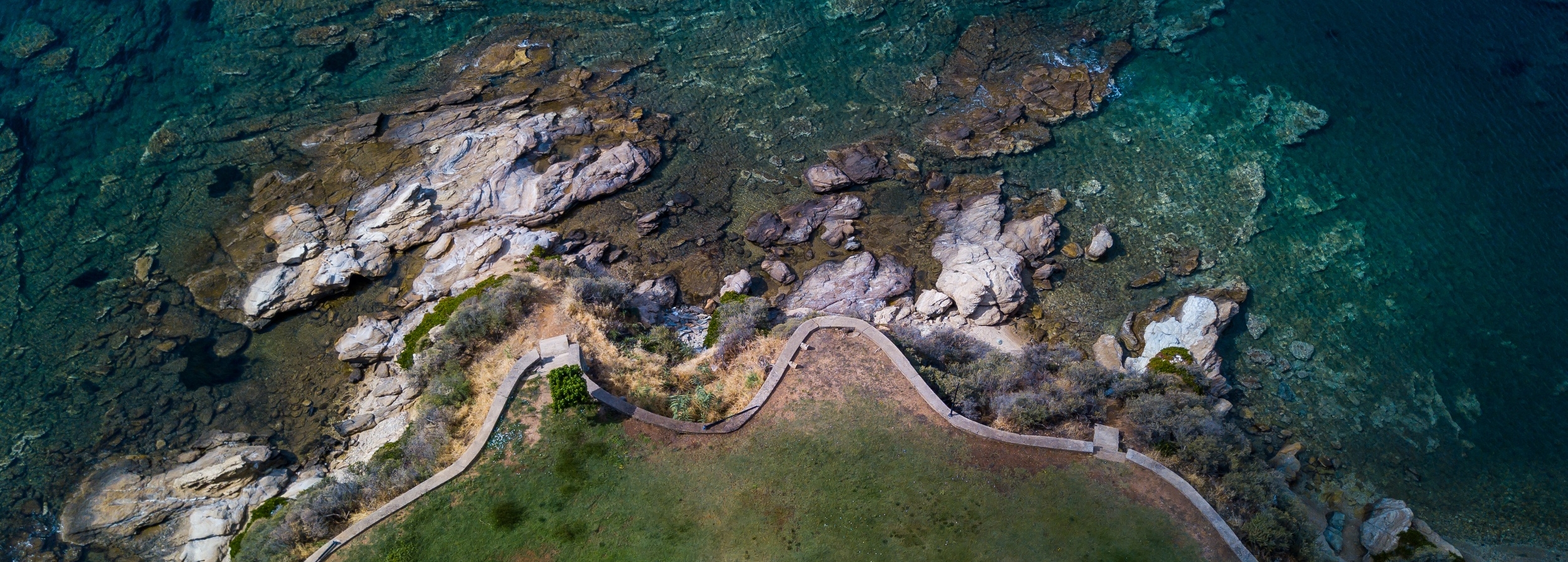
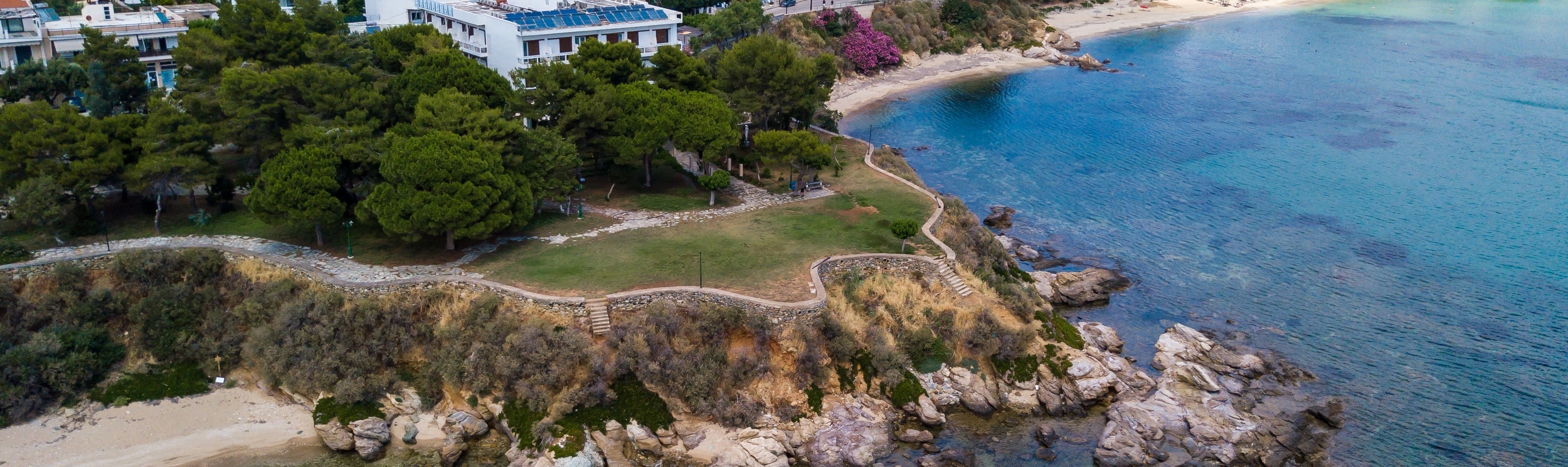
Day walks and hiking are among the most popular tourist activities, along with swimming and snorkeling. The beaches stretching from Karystos to the west are sandy and shallow; to the east, there’s no end to deep, rocky coves with clear, cerulean-tinted waters. For those who choose to neither walk or swim, Karystos and its environs offer exercise for every palate, for the area has its own wineries and a distinctive cuisine that includes orange-spiced sausage, a type of homemade gnocchi (stuffed with spinach, cheese, or meat), grilled meats, and local seafood. Handmade pastas and preserved spoon sweets, which are available from almost every grocer,    are among the region’s favorite offerings, as is homemade tsipouro (an ouzo
   without anisette).

  Karystos was originally designed by a favorite architect of Greece’s first king, Otto.   Some lovely Bavarian-type homes and neoclassical buildings are still extant, and the   town has an open-air cinema, a theater, an impressive archeological museum, and a   historical house whose folk collection illumines the way people lived in the not-so-   distant past, as well as a full-service tourist office. The closest port is Marmari, some   six miles away, where ferries shuttle to and from Rafina on the Attica mainland.
  The ferry crossing takes almost an hour. Athens’ Eleftherios Venizelos airport is a   twenty-five minute bus ride from Rafina, and the center of Athens—not twenty miles   from Rafina—can be reached in an hour by bus or car.

click to enlarge

Photos by A. Deligiorgis


[Home] [Rooms] [Facilities & Services] [Rates] [About the area] [Contact]